A funny thing happened to me today. I was attending a luncheon organised by Stroke Support Station to commemorate World Stroke Day and thank its sponsors. Movement First, one of the businesses I co-founded, was among them. I wasn’t expecting to meet anyone particularly familiar, but there was Yen Tan, someone I first worked with almost 20 years ago, when I was a 19-year-old polytechnic graduate working at Alexandra Hospital. She’s now the CEO of the National Kidney Foundation (NKF).
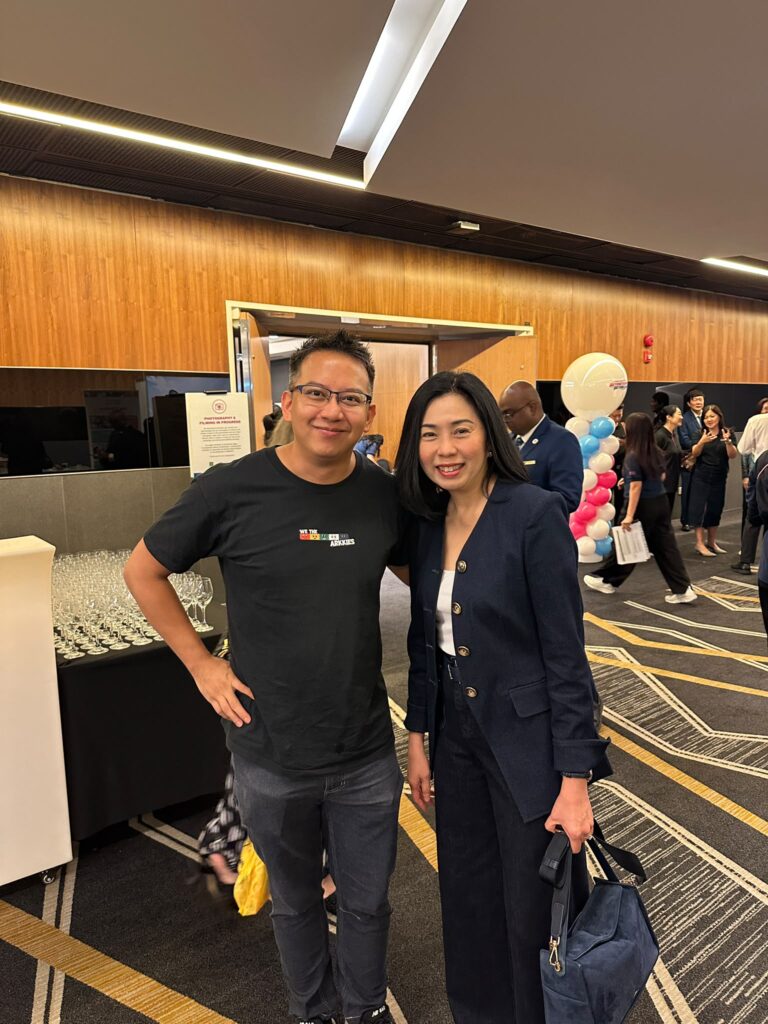
We had actually intended to meet at another NKF event, except there had been a scheduling mix-up and I’d been given the wrong date. So it was quite a coincidence that we ended up at the same event today. After the luncheon, I walked with her towards Millenia Walk, where she had another appointment. Somewhere along the way, she asked me how long I’d been running my businesses.
“Since around 2012,” I replied.
“Oh, so it took you 14 years to open 25 gyms?”
“No, no. We only started opening the gyms in 2021.”
She was rather stunned when I explained that we’d opened around 25 gyms in just five years. I went on to tell her about the millions of dollars we had borrowed, the financial risks we’d taken, and how the businesses had evolved from trading and equipment supply into operating fitness facilities across Singapore. From her perspective, she’d known me since I was a teenager with no particular business credentials, family wealth or connections. While we’d caught up a few times over the years, much of the growth had happened relatively recently.
I suppose that’s when I started thinking about how strange my life must look to someone who knew me before any of this started. And it reminded me of the rather unusual experiences I had working for other people before becoming an entrepreneur.
WHEN I WAS A RATHER USELESS INTERN
I’ve never held a full-time job in my life. I did, however, have three fairly memorable internships or short working stints before I started my businesses. Looking back, I was extraordinarily fortunate to have encountered the people I did, although I certainly wasn’t a model employee throughout.
My first internship was during my polytechnic days, at an events company run by a friend who was considerably older than me. He was probably in his early to mid-30s, while I was 17 or 18, with some rudimentary photography and design skills and not much else to offer. He was an entrepreneur himself, juggling his events business in Singapore while exploring other ventures in Vietnam. He had all sorts of ideas, including organising balloon-sculpting competitions, but wasn’t in Singapore very often.
The office was around Beach Road, near Golden Mile Complex. Those who remember the area from those days might recall the food stores downstairs. You could order food and have it delivered directly to the office, sometimes on an actual plate rather than in disposable packaging. That was quite a luxury for a young intern, and I probably remember the food more fondly than the work. Unfortunately, I also spent a fair amount of my working hours playing Dota.
My friend wasn’t around much, and I was left under the supervision of a full-time employee whom I didn’t think was particularly capable. By the end of the internship, my friend had a rather frank assessment of my performance. He said that whenever he gave me something I was good at, such as design or photography, I was reluctant to do it because I felt the work was worth considerably more than my internship allowance. But when he gave me something I wasn’t good at, such as administration or planning, I didn’t do it particularly well either. So from his perspective, he wasn’t getting much value out of employing me.
I remember thinking that he hadn’t exactly provided the best working environment either. Looking back, we were probably both right. I was immature, and my attitude towards work wasn’t particularly admirable. But I was also a young person without much direction, working for someone who was seldom around to guide me. It’s quite funny to think about this now, because I employ people myself. I wonder how I would react if I discovered one of my interns spending half his day playing Dota. Probably not very favourably.
SOMEONE GAVE A 19-YEAR-OLD AN ENTIRE HOSPITAL WEBSITE
After polytechnic, I had a few months before National Service. I wrote to Mr Liak Teng Lit, who was then the CEO of Alexandra Hospital, looking for an opportunity to work there. Somehow, I ended up being entrusted with the redevelopment of the hospital’s website. Not a small subsection of the website, but the entire project. I was 19, and I still find it quite remarkable that a hospital was willing to place that much responsibility on someone who hadn’t even entered university.
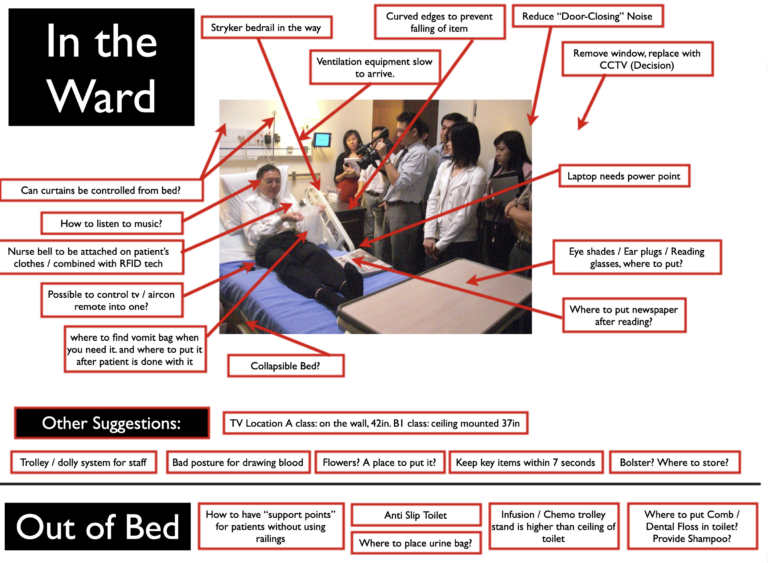
I worked under the Corporate Communications team, with Eunice, a senior manager, and Yen Tan, who was then the department’s director. The project involved coordinating with external vendors, understanding what the hospital wanted, and speaking to the people who actually used its services. Doctors, nurses, customer service officers and other stakeholders all had different perspectives on what information ought to be available. What were patients always asking about? What information did they struggle to find? What did hospital staff wish the public understood before coming in?
We looked at how other hospitals presented information, considered what could be improved, worked through the scope with vendors and developed something that would actually be useful. This was in the late 2000s, when websites were rather different from what they are today. Content management systems weren’t nearly as sophisticated, and even relatively straightforward changes could require considerable coordination with developers. It wasn’t simply a matter of asking an AI tool to generate a website and deploying it a few hours later.
What I remember most was the freedom and responsibility I was given. The hospital didn’t make me spend my days photocopying documents or doing administrative work simply because I was young. They gave me a real problem to solve, access to people who understood the problem, and the opportunity to take responsibility for it. The website was subsequently launched, substantially retaining the work we’d done together with the vendors.
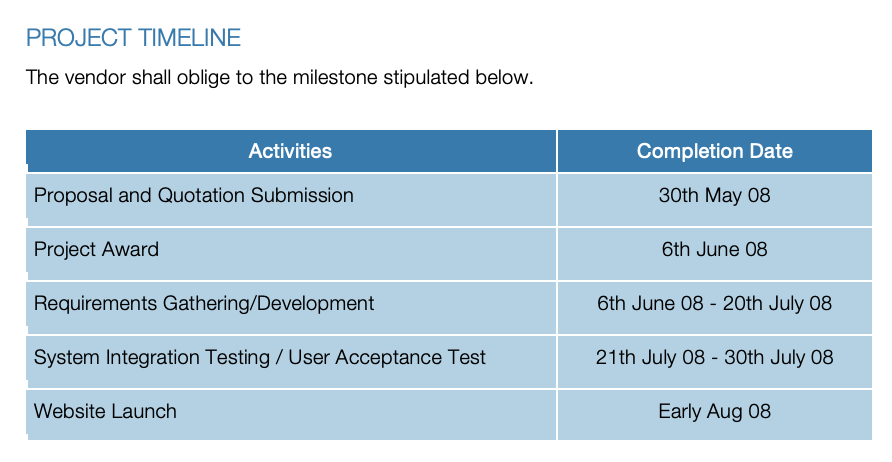
For someone who had just come from an internship where his boss felt he wasn’t particularly useful, it was quite a contrast. I don’t think I suddenly became a different person, but the circumstances were different. One environment gave me plenty of idle time and very little direction. The other gave me responsibility that probably exceeded my experience and expected me to figure things out. I responded very differently.
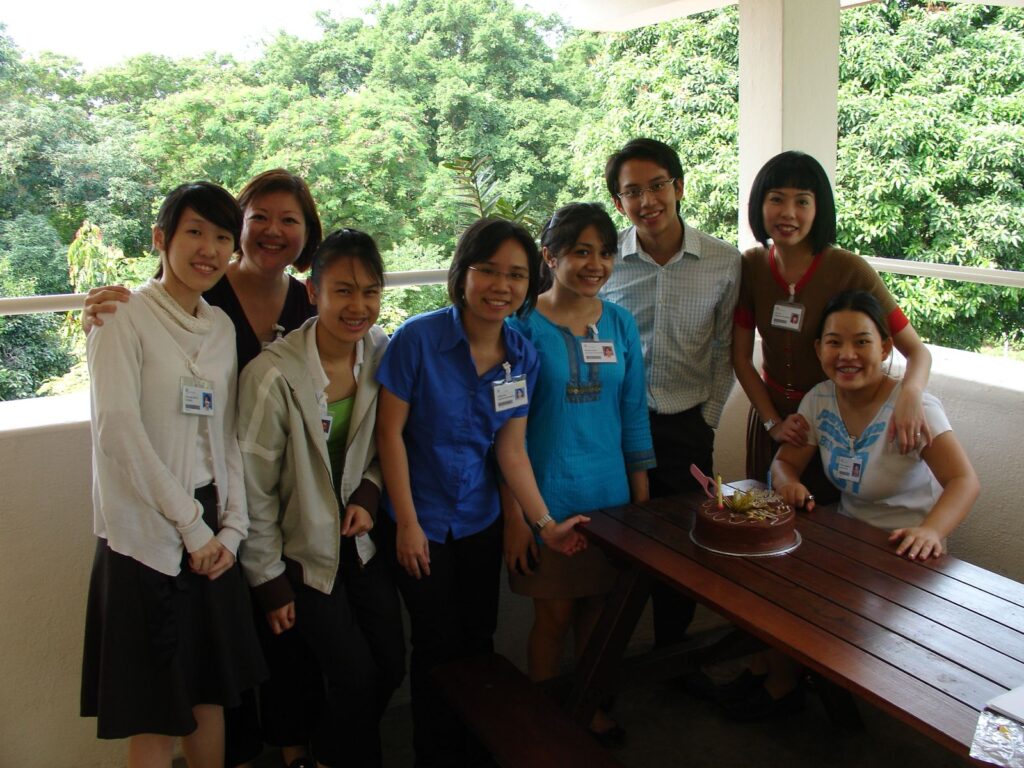
I still have a photograph from those days, taken during a birthday celebration in the office. There I am, a rather young-looking fellow surrounded by the hospital team. I posted it on Instagram today alongside a photograph of Yen and me from our reunion. Almost 20 years apart, and the hair has certainly changed quite a bit. So has everything else.
THREE DAYS OF WORK IN 30 MINUTES
My next memorable internship was at Nielsen, the market research company. I was already studying at university and working on my own startup. A lot of the tasks assigned to interns involved data processing, copying information between spreadsheets and producing reports. The sort of work that could occupy someone for several days, except I realised that much of it could be automated. With some Excel macros and a little ingenuity from stackoverflow, work that was supposed to take three days could sometimes be completed in about 30 minutes.
Now, most people who have worked in an office can probably guess what normally happens next. You finish your work early, and your manager gives you more work. Congratulations on being efficient. Here are another five spreadsheets.
But I had a rather unusual manager. He felt that if I had completed the work assigned to me, I shouldn’t be penalised simply because I found a faster way to do it. He also knew I was working on my own business, and he protected me from other managers who might otherwise have happily filled up my time with their own assignments. His reasoning was that I had fulfilled my responsibilities as an intern, and any additional work should come through him rather than from someone else who happened to notice I was free.
I still had to look reasonably busy, of course. But I was able to use much of the time I saved to work on my business, while still completing what was expected of me. I also had opportunities to sit in on meetings with media companies and learn how audience statistics could be segmented in different ways. With the right definitions, seemingly everyone could be the number one radio station, television channel or publication in Singapore.
It was an eye-opener, not necessarily because anyone was making up numbers, but because the way information is presented can dramatically change what people believe those numbers mean. A company could truthfully claim to be number one in a narrowly defined category while giving the casual reader the impression that it was number one overall. That’s a lesson I’ve carried with me ever since, and one reason I’m naturally sceptical when businesses present impressive statistics without explaining how those figures were derived.
But the bigger lesson was from my manager. He didn’t measure my contribution by how many hours I appeared to be working. He cared that the work was done, and because he gave me that freedom, I could spend more time building something of my own. Almost two decades later, with AI making it possible to complete hours of work in minutes, I find myself thinking about his approach again.
If an employee can do three days of work in half an hour, what exactly are we paying for? Three days of attendance, or the result? I’m not sure there is one universal answer, especially when someone is employed to be available throughout the day. But it is an increasingly relevant question as technology changes what people can accomplish in a given amount of time.

THE YEARS THAT CAME AFTER
I eventually started my businesses without ever taking up a conventional full-time job. The early years were mostly about trading, selling equipment, learning procurement, dealing with customers and figuring out how to keep things going. Movement First, Javy Sports and the businesses that followed were built progressively. For a long time, the growth probably didn’t look particularly remarkable from the outside. It was simply a matter of doing more business each year, developing new capabilities and finding ways to serve customers better.
Then, growth in locations exploded. That sounds rather impressive when condensed into a single sentence, but what the sentence leaves out is the financial pressure. We took on several million dollars in loans, committed substantial capital to building facilities, and took risks that could have gone very badly if our assumptions were wrong. There were periods when the financial obligations were frankly uncomfortable, and the prospect of failure was very real.
All of this happened without a family business to inherit, substantial family wealth to fall back on, or an established network of wealthy investors opening doors for us. We had to learn how to build and operate facilities, source equipment, negotiate with landlords, hire people, maintain gyms and somehow make the economics work. Much of it was built on the capabilities we’d accumulated during the preceding decade, from dealing with equipment manufacturers to understanding the cost of fitting out a facility.
When Yen heard this, she was surprised not just by the number of gyms, but by how quickly the expansion had happened. I suppose from her perspective, she’d watched my journey in occasional snapshots over nearly 20 years. We’d met a few times in between, but the progress had been gradual. Then suddenly, the businesses had grown substantially.
The funny thing is that when you’re living through it, the growth doesn’t always feel quite so dramatic. You’re too busy dealing with the next problem, whether that’s a new lease, a contractor, a technical issue or an unexpected operational challenge.
WHEN AN OLD BOSS CALLS YOU HER PROTÉGÉ
One thing that struck me today was how happy Yen seemed to be about what I’d accomplished. She was comfortable introducing me as someone who had worked under her many years ago, even describing me as her protégé. I suppose there’s a certain satisfaction in watching someone you knew when they were young go on to do something unexpected. Perhaps it’s a little like seeing an old student succeed. You don’t need to have taught them everything they know to be happy about where they’ve ended up.
In a way, the relationship has also come full circle. I certainly didn’t foresee this when I was working on the hospital website, or when we were celebrating my birthday in that old photograph. And neither of us could have predicted that a chance encounter at an entirely different event, almost 20 years later, would lead to such a conversation.
I hope I’m able to give a few of them the same opportunities that others once gave me. Because if there’s anything I’ve learnt from the last 20 years, it’s that we are often very poor judges of what our lives, and the lives of those around us, might eventually become.
Give real problems, measure output and protect people who deliver.
Leave a Reply